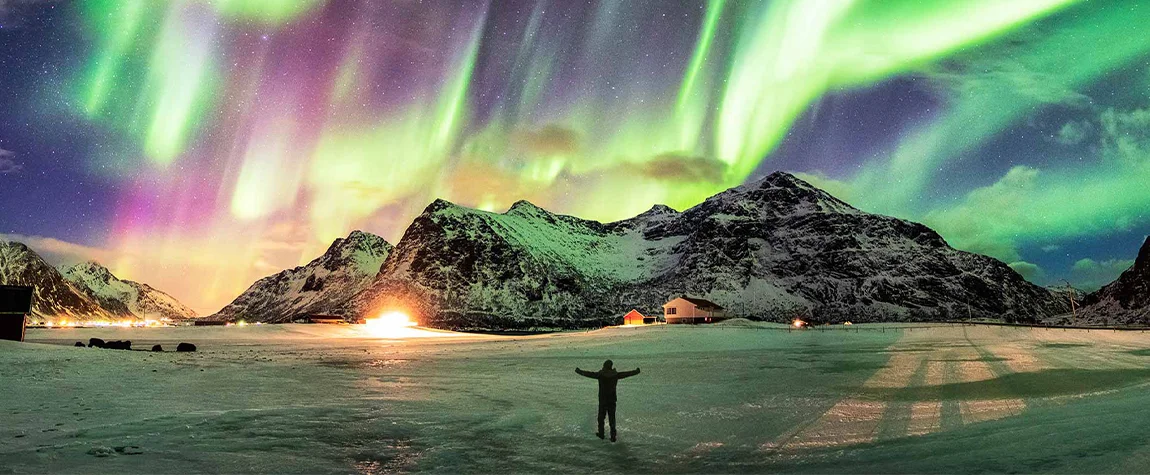
A powerful geomagnetic storm is expected to create spectacular Northern Lights displays across unusually southern latitudes this week, with aurora visibility predicted as far south as Chicago and Colorado. Space weather forecasters are tracking a coronal mass ejection (CME) that left the sun two days ago and is expected to reach Earth by Wednesday evening.

🌌 Quick Facts

Best Viewing Times: Wednesday & Thursday night, 10 PM - 2 AM local time

KP Index Forecast: 6-7 (Moderate to Strong geomagnetic storm)

Southern Visibility: Possibly as far south as 40° latitude

What's Causing This Unusual Aurora Activity?

The current solar cycle (Solar Cycle 25) is proving to be more active than initially predicted by NASA and NOAA. We're currently approaching solar maximum, expected in 2025, which means more sunspots, solar flares, and coronal mass ejections.

The specific event driving this week's aurora display is a M-class solar flare that occurred on November 10, followed by a significant coronal mass ejection directed toward Earth. When these charged particles interact with Earth's magnetic field, they create the spectacular light shows we know as the aurora borealis.

Advertisement

Best Viewing Locations by Region

Northern States (Excellent Viewing)

If you're in Minnesota, North Dakota, Montana, Washington, or Maine, you're in for a treat. These locations have the highest probability of visible aurora, potentially directly overhead with vibrant colors.

  • Minnesota: Voyageurs National Park, Boundary Waters
  • Montana: Glacier National Park, areas away from city lights
  • Washington: North Cascades, Olympic Peninsula

Central States (Good Chance)

Residents of Illinois, Iowa, Nebraska, and Colorado should look toward the northern horizon after 10 PM. While the display might not be directly overhead, there's a strong chance of visible aurora activity.

  • Chicago area: Head to rural areas north of the city for best viewing
  • Colorado: Rocky Mountain National Park, areas with clear northern horizons

Unexpected Southern Visibility

If the geomagnetic storm reaches KP-7 levels as some models predict, there's a small chance the aurora could be visible as far south as Kansas, Missouri, and even Virginia. While unlikely, it's worth checking the northern sky if you're in these regions.

Photography Tips for Capturing the Aurora

To photograph the Northern Lights successfully, you'll need:

  1. A camera with manual controls (DSLR or mirrorless)
  2. A sturdy tripod to prevent camera shake
  3. A wide-angle lens with a large aperture (f/2.8 or wider)
  4. Remote shutter release or use camera's timer

Set your ISO between 800-3200, shutter speed between 5-25 seconds, and aperture as wide as possible. Focus manually on a bright star or distant light, then don't touch the focus ring.

Advertisement

Real-Time Aurora Forecasting Resources

For the most up-to-date information, check these resources in the hours before you plan to view:

  • NOAA Space Weather Prediction Center: Provides 30-minute aurora forecasts
  • University of Alaska Fairbanks: Aurora forecast specific to North America
  • SpaceWeatherLive app: Real-time alerts and KP index updates
"This could be one of the best aurora displays for mid-latitude viewers in several years. The combination of an active solar cycle and favorable Earth orientation makes conditions ideal." — Dr. Sarah Chen, Space Weather Researcher

Final Viewing Tips

Remember that aurora viewing requires patience and dark skies. Get away from city lights, allow your eyes 20-30 minutes to adjust to the darkness, and dress warmly. Even if the aurora isn't immediately visible, sometimes it appears suddenly and can change rapidly.

Check local weather forecasts for cloud cover, as clear skies are essential. The best viewing typically occurs between 10 PM and 2 AM local time, though strong storms can create displays earlier in the evening.

This geomagnetic activity is expected to continue through Thursday night, giving multiple opportunities for viewing across North America.